
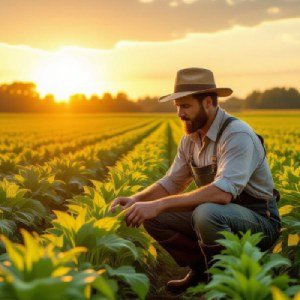
Regenerative agriculture is a holistic land management approach that goes beyond simply sustaining the land—it actively works to restore and enhance ecosystems. Rooted in principles of working with nature rather than against it, regenerative agriculture helps revitalize soil health, increase biodiversity, and capture carbon from the atmosphere, making it a powerful solution for both food production and climate change. This approach also improves the water cycle by increasing the soil’s ability to retain moisture, which makes farms more resilient to droughts and floods. By reducing the need for synthetic fertilizers and pesticides, it also helps lower farming costs and supports healthier, more nutrient-dense food.
Unlike conventional agriculture, which often relies heavily on synthetic chemicals Organic gardening doesn’t require any chemicals rather to use all organic products that can be found in nature and intensive tilling, regenerative farming focuses on techniques such as:
> Cover cropping: Planting non-cash crops, like clover or vetch, to prevent soil erosion, suppress weeds, and enrich the soil with organic matter.
> Crop rotation: Alternating different types of crops in the same field to improve soil fertility and break pest and disease cycles naturally.
> No-till or low-till farming: Minimizing or eliminating soil disturbance to maintain soil structure, preserve organic matter, and support beneficial microorganisms.
> Agroforestry: Integrating trees and shrubs into crop and animal farming systems to enhance biodiversity, create microclimates, and provide additional food and resources.
Integrating livestock: Allowing animals to graze on cropland, which helps to cycle nutrients, control weeds, and build healthy topsoil, mimicking natural prairie ecosystems.
> Composting: Utilizing organic waste to create nutrient-rich compost, which is then added back to the soil to improve its health, structure, and water retention.
At its core, regenerative agriculture recognizes the farm as a living ecosystem, where every element—soil, water, animals, and humans—are interconnected. This approach not only improves the nutritional value of food but also helps communities build stronger local food systems and more resilient economies.
Whether you’re a farmer, gardener, or conscious consumer, supporting regenerative agriculture is a step toward healing the Earth—one field at a time.