
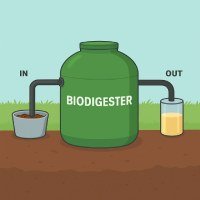
Biodigester: How to Produce Cooking Gas at Home
A biodigester is an eco-friendly system that converts organic waste into biogas, which can be used
as cooking gas. It also produces nutrient-rich slurry that can be used as fertilizer for plants.
Biodigesters provide a sustainable solution for waste management while generating renewable energy.
What is a Biodigester?
A biodigester is a sealed container where organic waste such as food scraps, animal manure, and
plant residues are broken down by bacteria in an oxygen-free environment. This process, called
anaerobic digestion, produces methane gas that can be captured and used as cooking fuel.
How Biodigesters Produce Cooking Gas
The process of making cooking gas from organic waste involves several steps:
- Collect organic waste: food scraps, vegetable peels, animal manure, or plant residues.
- Feed the waste into the biodigester tank along with water to create a slurry.
- Seal the tank to create an oxygen-free environment.
- Bacteria break down the organic material, producing methane (biogas) and carbon dioxide.
- Collect the biogas through pipes connected to the top of the tank.
- Store the gas in a gas holder or pipe it directly to a stove for cooking.
Materials Needed to Build a Simple Biodigester
- A large airtight container or tank (plastic or metal) for the digester
- Pipes and valves for gas collection
- Flexible tubing to transport biogas
- A gas holder or balloon to store gas
- Water for mixing with organic waste
- Organic waste such as food scraps or animal manure
Steps to Build a Basic Biodigester
- Choose a location that is safe and well-ventilated, away from direct sunlight and fire sources.
- Prepare the airtight container by sealing all openings except for an inlet for waste and an outlet for gas.
- Connect a pipe at the top of the tank to transport the produced biogas to a gas holder or stove.
- Mix organic waste with water to form a slurry and pour it into the digester through the inlet.
- Seal the inlet tightly to maintain an oxygen-free environment inside the tank.
- Wait for a few days as bacteria break down the waste and produce biogas. The time depends on temperature and waste type.
- Use the biogas for cooking. Start with small amounts to ensure the system is safe and functioning properly.
- Regularly add more organic waste to maintain gas production and remove the slurry for use as fertilizer.
Safety Tips
- Always check for leaks in the pipes and tank.
- Do not expose the gas to fire before it reaches the stove or holder.
- Keep the biodigester in a shaded and ventilated area.
- Wear gloves when handling organic waste and slurry.
- Do not ingest the slurry; it is fertilizer, not food.
Benefits of Using a Biodigester
- Provides renewable cooking gas, reducing reliance on fossil fuels.
- Reduces organic waste in the environment.
- Produces natural fertilizer for gardening and farming.
- Helps reduce greenhouse gas emissions by capturing methane.
- Cost-effective and sustainable energy solution for households and communities.
A biodigester is an excellent way to turn organic waste into a useful resource. By following
these steps, anyone can build a simple biodigester at home and produce cooking gas while contributing
to a cleaner, sustainable environment.