
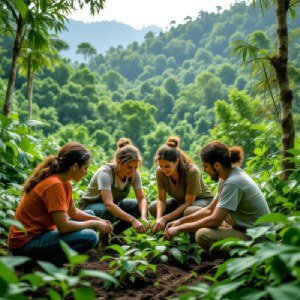
Harmony in Nature
According to United Nations Food and Agriculture Organization (FAO) today called on countries to boost efforts to promote Agroforestry, a practice involving the combination of trees with crop or livestock production, stressing it can help millions of people escape poverty and prevent environmental degradation, making it crucial to ensure food security in the future.
According to Wikipedia Agroforestry is a land use management system in which trees or shrubs are grown around or among crops or pastureland. This intentional combination of agriculture and forestry has varied benefits, including increased biodiversity and reduced erosion.Agroforestry practices have been successful in sub-Saharan Africa[2] and in parts of the United States.[3][4]
Agroforestry is a regenerative land-use practice that combines trees, shrubs, and crops or livestock in integrated systems. At Permia Community, agroforestry plays a central role in supporting sustainable food production while restoring natural ecosystems. By blending agriculture and forestry, this approach enhances soil health, increases biodiversity, and improves water retention—all while producing food, fuel, medicine, and building materials. Trees are strategically planted to protect crops from wind, shade animals, and reduce erosion, making farms more resilient to climate change and drought.
Permia uses agroforestry methods
> Alley cropping – where crops grow between rows of nitrogen-fixing trees
> Silvopasture – integrating trees with rotational grazing for animal well-being and pasture regeneration
> Forest gardening – designing layered food systems like natural forests with fruit trees, shrubs, herbs, and groundcovers
These systems mimic natural ecosystems, reducing the need for chemical inputs and supporting the health of pollinators and native wildlife.
Agroforestry at Permia is not just about food—it’s about harmony with the land, honoring Indigenous wisdom, and creating self-sustaining ecosystems that nourish both people and planet.